
Blog
AI Smart Glasses ODM Development Checklist for Brands

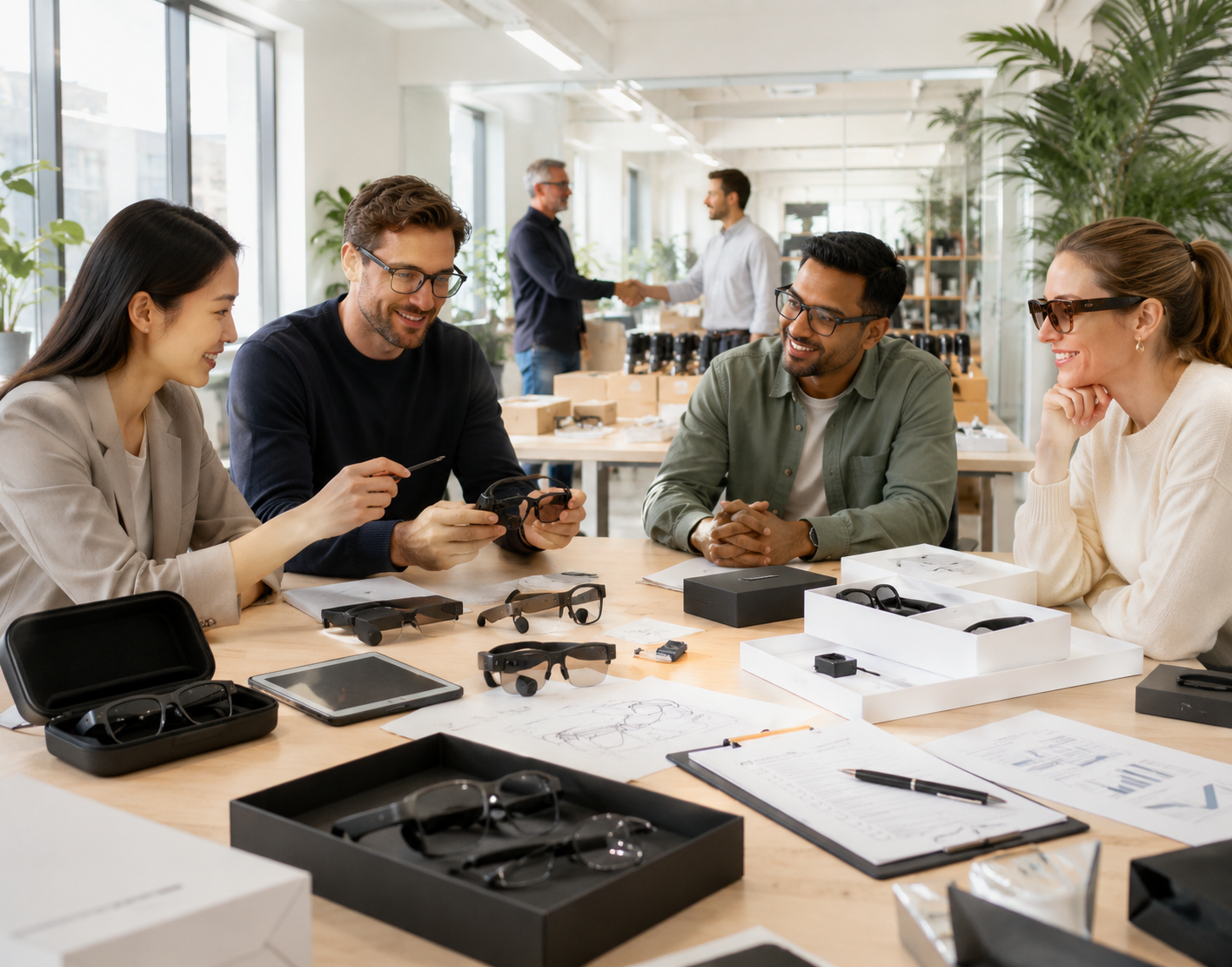
AI smart glasses ODM projects often fail or slow down because the team jumps into hardware selection before confirming the product architecture. For eyewear, outdoor, sports, and consumer electronics brands, the practical question is not only whether a camera, audio module, or app can be added to a frame. The real question is whether the full product can be engineered, certified, manufactured, and worn comfortably.
This checklist summarizes the decisions a brand should clarify before starting an AI smart glasses ODM project with Neomix. It is designed for product managers, sourcing teams, eyewear brands, and outdoor brands evaluating smart eyewear development in 2026.
1. Define the Product Positioning Before the Hardware Stack
Before selecting camera sensors, batteries, speakers, or chips, the project needs a clear user scenario. A product for outdoor POV capture has different engineering priorities from a white-label lifestyle frame, a professional inspection device, or a modular smart temple platform.
- Who is the target user: eyewear buyer, cyclist, traveler, creator, professional user, or distributor?
- What is the core reason to wear the product every day?
- Should the product feel like eyewear first, camera first, or a hybrid device?
- Is the business model full ODM, JDM, white label, or platform customization?
For a broader view of available project routes, see our AI smart eyewear ODM solutions.
2. Confirm Frame Architecture and Smart Temple Space
The temple is the most important space in most smart eyewear projects. It may need to hold PCBA, battery, antenna, microphone, speaker, buttons, charging pins, and thermal design features while keeping the frame balanced and wearable.
Key checks include temple thickness, hinge strength, left-right weight balance, nose pad pressure, cable routing, assembly tolerance, and the visual identity of the eyewear. If the frame cannot support the electronics cleanly, the project may need a modular smart temple ODM approach instead of forcing electronics into an unsuitable frame.
3. Specify Camera and Imaging Requirements
Camera glasses are not only about sensor resolution. The camera angle, lens placement, EIS strategy, low-light performance, image processing, heat, battery drain, and privacy indicator all affect the final user experience.
- Target field of view and camera position
- Photo, video, live capture, or short POV recording use case
- Stabilization expectations for walking, cycling, and outdoor movement
- Storage, app transfer, and wireless connection workflow
- Privacy indicator and market compliance expectations
If imaging is the core feature, review our camera glasses manufacturer capability page.
4. Plan Audio, Microphone, and AI Interaction Early
Open-ear audio and voice interaction can improve the value of AI smart glasses, but they add mechanical and acoustic complexity. Speaker position, leakage control, microphone direction, wind noise, AI noise reduction, and call quality should be evaluated together with frame shape.
For AI interaction, brands should also define what the app or voice assistant actually does: capture control, translation, reminders, camera mode switching, sharing, firmware updates, or device settings.
5. Validate Battery, Charging, and Heat
Battery capacity is limited by eyewear size and comfort. A larger battery may improve runtime but can make the temple heavy or visually bulky. Charging method also affects product design: magnetic charging, pogo pins, charging case, USB-C, and dock solutions each create different waterproofing and manufacturing challenges.
The practical checklist should include expected runtime, charging time, standby behavior, heat during recording, battery cycle life, and charging accessory requirements.
6. Prepare Certification and Export Requirements
Smart eyewear normally requires more than basic product appearance approval. Depending on the market and feature set, certification planning may involve CE, FCC, RoHS, wireless testing, battery transport documentation, packaging requirements, and product labeling.
Neomix helps brands prepare engineering information and production planning for certification routes, but the final requirements should always match the destination market and distribution channel.
7. Build the Pilot Production Plan Before Mass Production
A smart glasses ODM project should not jump directly from prototype to large-scale production. Pilot production helps validate assembly flow, testing tools, firmware loading, packaging, quality inspection, and failure points.
Important pilot checks include BOM stability, incoming material inspection, optical alignment, camera function test, audio test, charging test, wireless connection, app pairing, aging test, and final packaging inspection.
Recommended ODM Workflow
- Project brief: target market, feature set, frame direction, and launch timeline.
- Feasibility review: frame structure, electronics space, camera angle, battery, and compliance path.
- Specification definition: camera, audio, app, firmware, materials, packaging, and certification plan.
- Engineering prototype: mechanical adaptation, PCBA layout, firmware setup, and sample assembly.
- Validation: comfort, image quality, audio, heat, battery, charging, and reliability.
- Pilot run: production process, testing standard, packaging, and quality control.
- Mass production: final BOM, supply chain, delivery plan, and ongoing product support.
FAQ
How long does an AI smart glasses ODM project take?
The timeline depends on customization depth, frame complexity, camera specification, app requirements, certification scope, and pilot production plan. A white-label project is usually faster than a full ODM or JDM project.
Can Neomix start from an existing eyewear frame?
Yes. We can review an existing frame, but feasibility depends on temple space, hinge structure, camera position, battery, antenna, heat, assembly method, and target functions.
What should a brand prepare before contacting Neomix?
A useful brief includes target users, reference products, required features, target market, estimated quantity, preferred frame style, branding requirements, and launch timeline.
If your team is planning an AI smart eyewear project, start with the Neomix ODM solutions overview or contact us to review your product brief.